

The Sinking of HMS Royal Oak Through the Eyes of Two Survivors
In the early hours of 14 October 1939, HMS Royal Oak lay at anchor at Scapa Flow in Orkney, with more than 1,000 people aboard.
Among them was Royal Marine Horace Baber, who was asleep below decks when the first explosion woke him. Elsewhere on the ship, Paymaster Lieutenant-Commander Eardley Maclean was still awake, having stepped outside into the night and watched the Northern Lights over Scapa Flow.
Within minutes, both men would be fighting for their lives as torpedoes fired by the German submarine U-47 struck Royal Oak and the battleship began to sink.
The attack came just six weeks after Britain entered the Second World War and resulted in the deaths of 835 sailors and Royal Marines. Yet behind that number were more than a thousand individual experiences of what happened aboard Royal Oak that night.
Two remarkable first-hand accounts preserved in the Royal Navy Museums collection allow us to follow the sinking through the experiences of Baber and Maclean, from the first explosion to their struggle to survive in the freezing waters of Scapa Flow.
A battleship at Scapa Flow
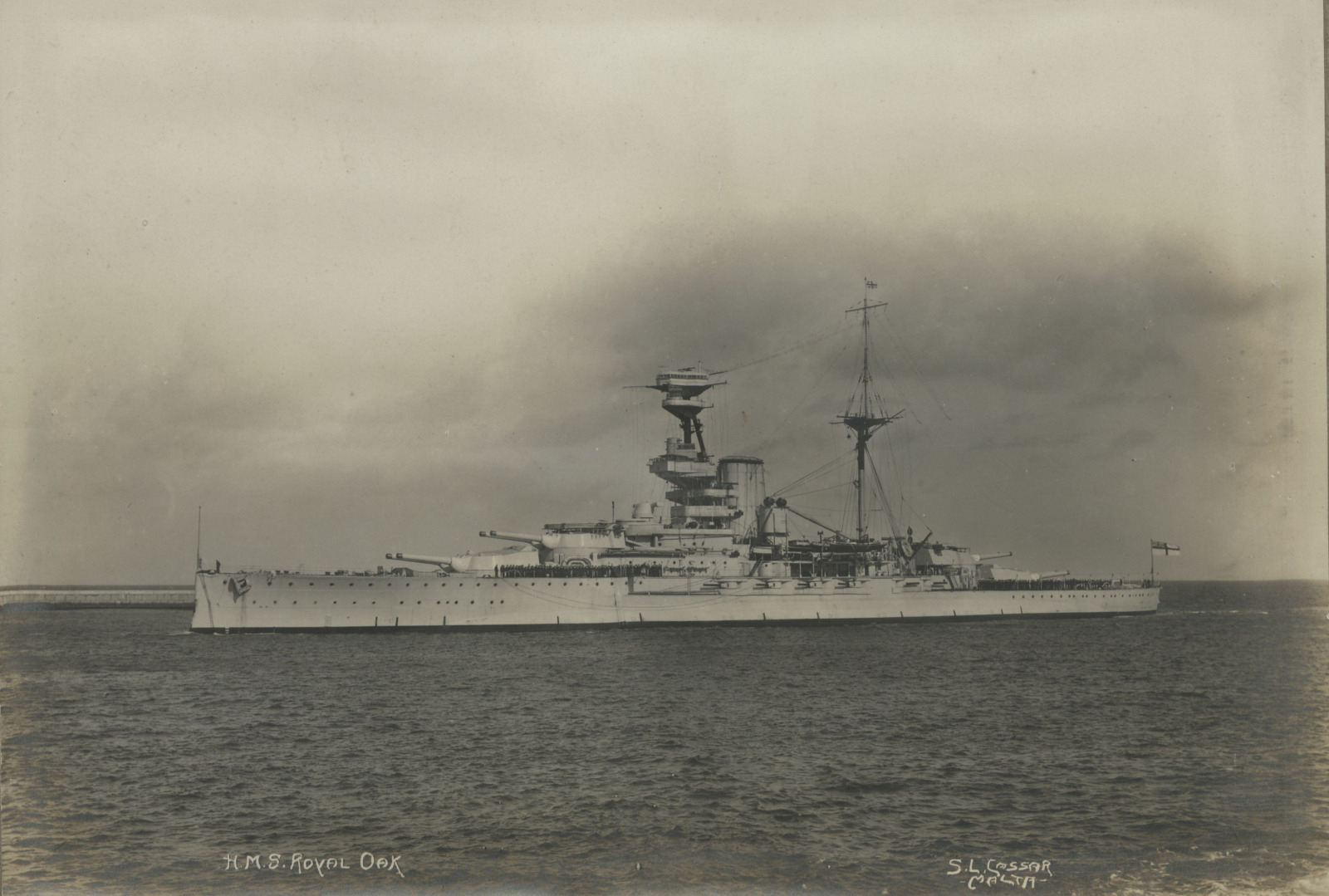
By the time HMS Royal Oak arrived at Scapa Flow in 1939, she had already served through more than two decades of Royal Navy history. Launched at Devonport in 1914 and completed during the First World War, the Revenge-class battleship fought with the Grand Fleet at the Battle of Jutland in 1916 before continuing in service through the interwar years.
By the outbreak of the Second World War, Royal Oak was an ageing battleship in a Navy that was changing rapidly, but she remained part of the Home Fleet. In October 1939 she was anchored at Scapa Flow, the vast natural harbour in Orkney that had become one of the Royal Navy's most important wartime bases.
The anchorage was heavily defended, but during the night of 13 to 14 October, U-47, commanded by Günther Prien, succeeded in passing through its defences and entering Scapa Flow.
Shortly before 1am, the submarine fired its first torpedoes towards Royal Oak. One struck the battleship, causing an explosion that woke many of those sleeping below decks, including Royal Marine Horace Baber.
‘All chaos and confusion’
Baber was asleep in the Royal Marines Mess when the first explosion woke him. When an all-clear followed, he returned to his hammock, unaware that U-47 was preparing to attack again.
A short time later, a second salvo of torpedoes struck Royal Oak. This time the effect was devastating. Baber woke to find the ship beginning to list heavily to starboard and, as he tried to make his way out of the mess, another explosion lifted him from the deck.
Flames spread through the space around him as smoke began to fill the compartment.
Although injured, Baber escaped the burning mess with three other men, only to discover that the door ahead of them was locked and could only be opened from the opposite side. With water already pouring through nearby portholes, they tried unsuccessfully to force it open until men on the other side were able to help, creating a gap just wide enough for them to squeeze through.
From there, Baber joined others trying to reach a ladder leading towards the upper deck. By the time he emerged, Royal Oak was listing severely and the scene around him had descended, in his own words, into ‘all chaos and confusion’.
With the ship sinking beneath him, Baber jumped into the freezing water. He decided that the shore was too far away to attempt to reach it and instead remained close to the ship in the hope that one of the rescue vessels would find him.
As he waited in the darkness, he turned back towards Royal Oak and watched the ship that had been his home disappear beneath the water:
“I looked back at the ship that twenty minutes before had been our home, now a mass of torn decks and plates sinking on her last journey. It was an awe inspiring sight a big mass of steel heeling over, with white flecked waves which seemed to be biting eagerly at their victim.”
Baber remained in the water with other survivors until their calls for help were eventually heard by a trawler, which pulled them aboard before taking them to safety.
‘The rest of the swim was a nightmare’
Elsewhere aboard Royal Oak, Eardley Maclean experienced those same minutes very differently.
Unlike Baber, Maclean had been awake before the attack. After spending part of the evening with another officer, he had gone outside and stood watching the Northern Lights when the first explosion occurred. Believing that there might have been an accident involving inflammable materials aboard the ship, he went to investigate.
He was still trying to establish what had happened when the second attack began.
As further explosions tore through Royal Oak and the ship rolled increasingly onto her starboard side, Maclean made his way towards the upper deck. There he saw one of the ship's boats in the water and, with other members of the crew, managed to slide down the side of the rapidly sinking battleship and climb aboard.
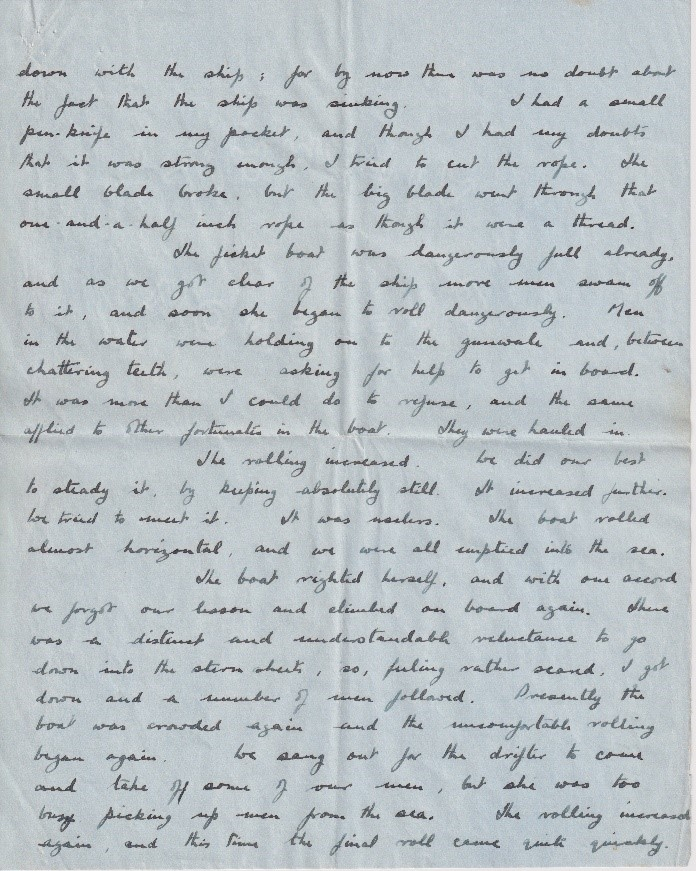
Their escape was far from over. The boat was overloaded and capsized, throwing the men back into the freezing, oil-covered water. They managed to right it, only for it to overturn again, leaving Maclean once more struggling in the sea as Royal Oak disappeared nearby.
Oil entered his mouth as he swam and the cold rapidly drained his strength. Recalling the experience afterwards, he described how “the rest of the swim was a nightmare”.
Eventually Maclean reached HMS Pegasus, where he was hauled from the water exhausted and so cold that he could do little more than shiver. His account records the small details that followed his rescue, from being offered brandy, which he declined, to the warmth of a bath and a blanket after the freezing water of Scapa Flow.
Baber and Maclean had begun the night aboard the same ship and lived through the same attack, but their accounts preserve two very different journeys through its final minutes. Together, they give us a sense of the confusion experienced by those aboard Royal Oak, when familiar passages and compartments became escape routes and survival depended on decisions made in darkness, smoke and freezing water.
835 lives lost
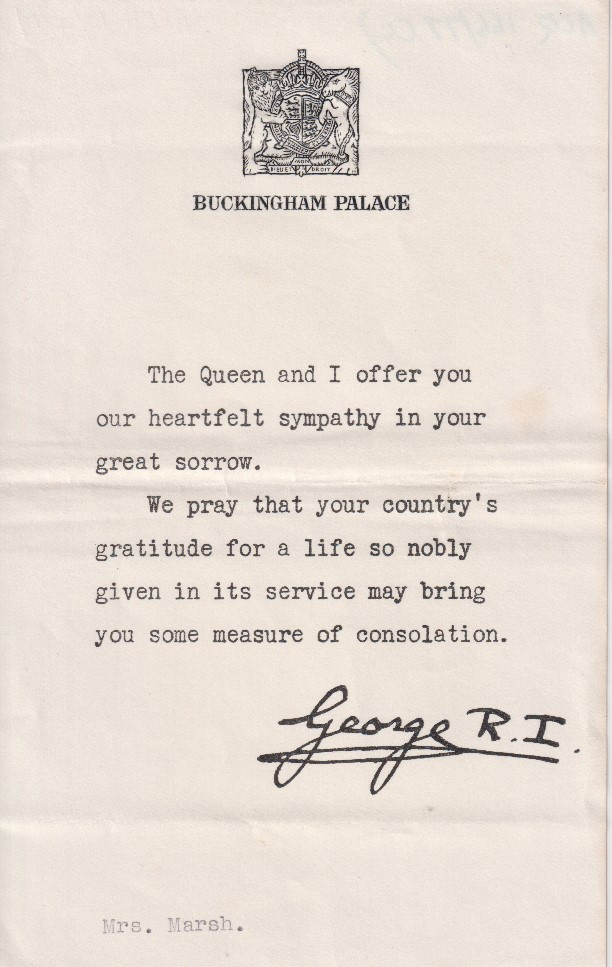
HMS Royal Oak sank in less than 15 minutes after the second attack, leaving little time for those below decks to escape. 835 sailors and Royal Marines lost their lives that night or later died from their injuries.
Among those killed were 134 boy seamen under the age of 18, adding another deeply shocking dimension to an already devastating loss.
The ship herself remains where she sank and is a protected war grave. Each year, Royal Navy divers traditionally descend to the wreck to replace the White Ensign in remembrance of those who died.
More than eight decades after the sinking of HMS Royal Oak, the voices of people who experienced that night survive in the Royal Navy Museums collection.
Discover more objects, photographs and personal stories connected with HMS Royal Oak in the Royal Navy Museums: Portsmouth collection.
This article was written by Mark Berry, Assistant Curator at Royal Navy Museums.