
The Royal Marine Who Offered Himself As a Target to Save His Troop
In early April 1945, during the final weeks of the Second World War in Europe, 21-year-old Corporal Thomas Peck Hunter was serving with C Troop, 43 Royal Marine Commando near Lake Comacchio in northern Italy.
As his troop advanced across ground offering almost no cover, Hunter saw that German forces occupying a group of houses were in a position to inflict heavy casualties. He took the Bren gun from his group and charged alone across approximately 200 yards of open ground, drawing fire from at least nine enemy machine guns as he ran.
Hunter reached and cleared the houses, forcing six German soldiers to surrender while the remainder fled. When his comrades were again exposed as they continued their advance, he positioned himself in full view of the enemy and opened fire on concrete pillboxes across the canal. By drawing the attack towards himself, he allowed many of the Royal Marines behind him to reach cover.
He continued firing until he was struck by machine-gun fire and killed. His Victoria Cross citation later concluded that there could be “no doubt” he had deliberately offered himself as a target to save his troop.
From Edinburgh to 43 Commando
Thomas Peck Hunter was born in Aldershot on 6 October 1923 and grew up in Edinburgh, where he attended Stenhouse and Tynecastle schools. Before joining the Royal Marines, he worked as an apprentice stationer.
Hunter joined the Royal Marines in 1942 and was promoted to temporary corporal during the final months of the war. By April 1945, he was serving with 43 Royal Marine Commando as part of the Allied campaign in northern Italy.
Operation Roast was launched on 1 April around Lake Comacchio, approximately 50 miles south of Venice. The area formed the eastern end of the German defensive line in northern Italy and was an important objective ahead of the Allied spring offensive.
The operation aimed to seize the strip of land separating the lake from the Adriatic Sea, capture bridges across the surrounding rivers and canals, and neutralise the German positions in the area. The landscape was flat, wet and exposed, leaving the advancing Commandos with little protection from enemy fire.
Hunter was in charge of the Bren gun group supporting the leading section of C Troop. After advancing to within 400 yards of a canal, he recognised the danger posed by German troops occupying houses on its southern bank. The decision he made next placed him directly between the enemy and the Royal Marines advancing behind him.
The action at Lake Comacchio
Carrying the Bren gun, Hunter crossed approximately 200 yards of open ground while firing from the hip. He continued towards the houses despite the concentrated machine-gun fire directed at him and succeeded in clearing the position.
With the houses captured, Hunter turned his attention to concrete pillboxes on the opposite side of the canal. He lay in an exposed position and continued firing, drawing much of the enemy’s attention away from the other Royal Marines as they crossed the open ground.
Hunter was killed instantly when he was struck in the head by a burst of machine-gun fire. His actions had enabled many members of his troop to reach cover and continue towards their objective.
The citation published with his Victoria Cross described how his skilful and accurate use of the Bren gun had demoralised the enemy and silenced several of the weapons firing on his troop. It concluded:
“Throughout the operation his magnificent courage, leadership and cheerfulness had been an inspiration to his comrades.”
Operation Roast continued for three days. Despite sustaining heavy casualties, 2nd Commando Brigade achieved its objectives and German forces around Comacchio were either captured or defeated.
Hunter’s Victoria Cross
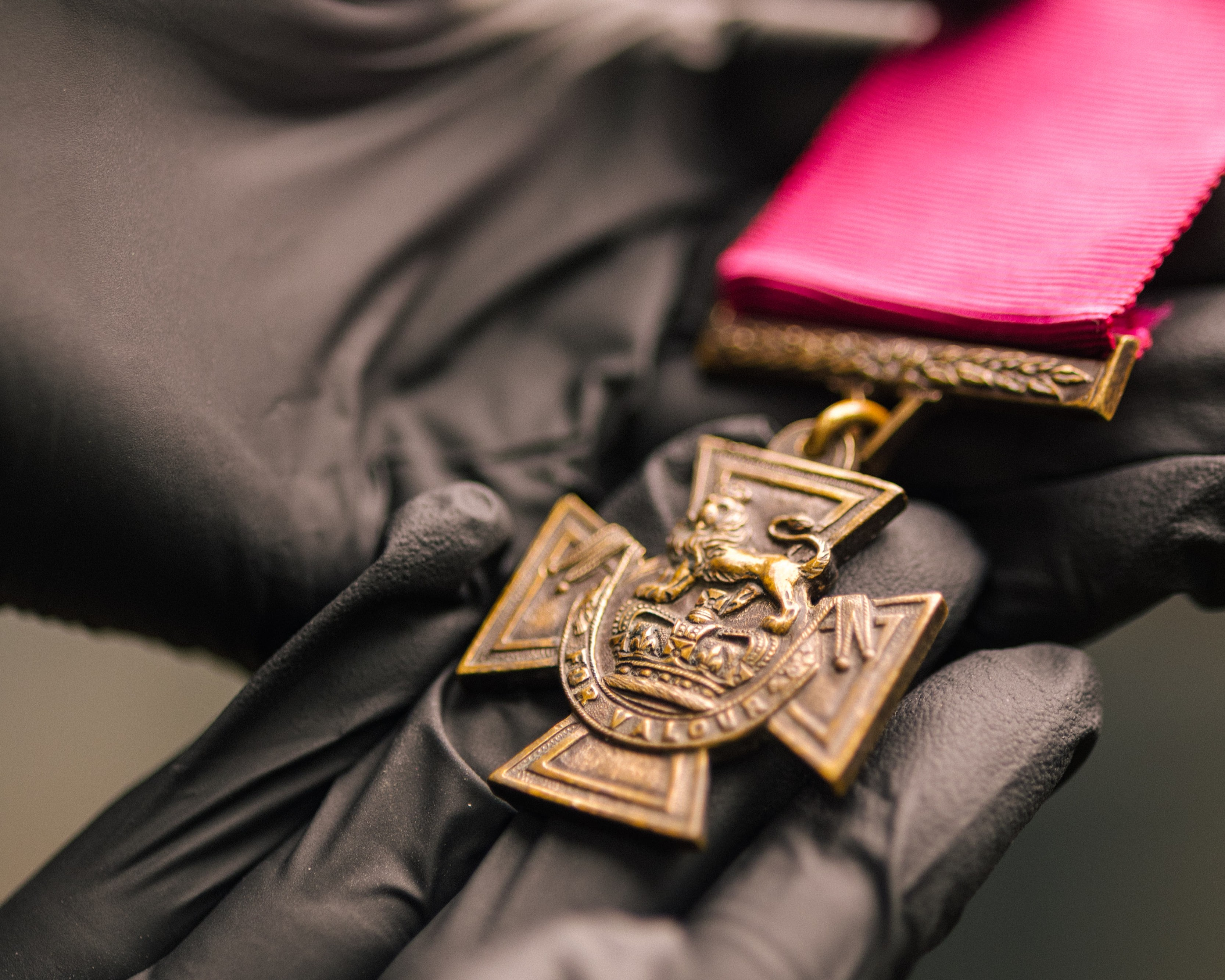
Corporal Hunter was posthumously awarded the Victoria Cross, Britain’s highest military decoration for valour in the presence of the enemy.
King George VI presented the medal to Hunter’s parents during a private investiture at the Palace of Holyroodhouse on 26 September 1945. Hunter was the only Royal Marine awarded the Victoria Cross during the Second World War. He remains the most recent Royal Marine to receive the medal and the only Royal Marines Commando Victoria Cross recipient.
The Battle of Lake Comacchio remains the Unit Memorable Date of 43 Commando Fleet Protection Group Royal Marines. Hunter’s courage and commitment to those serving beside him continue to hold particular meaning for the unit.
Preserving the story behind the medal
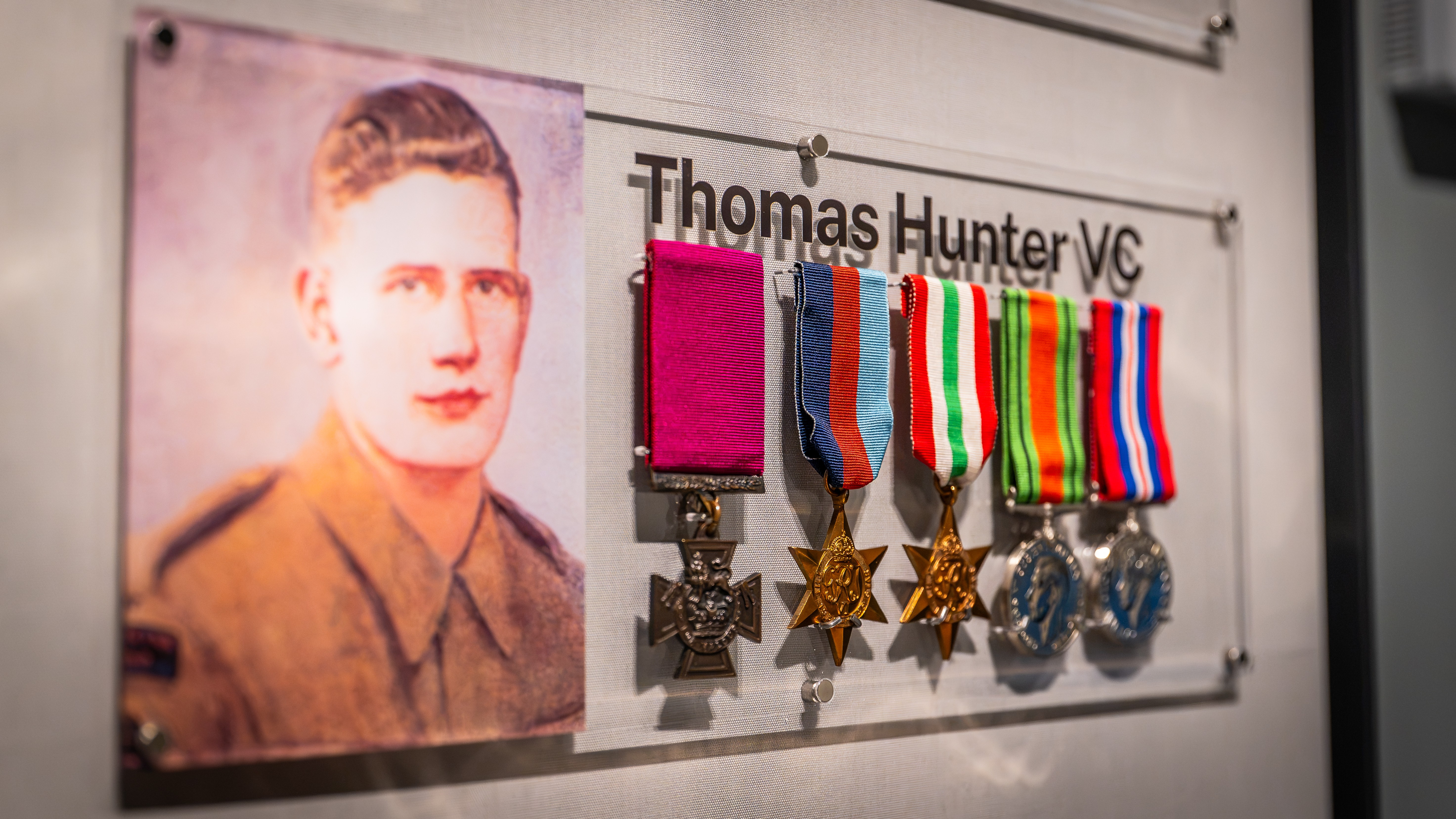
Corporal Hunter’s Victoria Cross now forms part of the Royal Navy Museums collection. It is one of ten Victoria Crosses awarded to Royal Marines since the medal was established in 1856.
All ten medals will be displayed together inside the new Royal Marines Experience at Portsmouth Historic Dockyard. The display will allow visitors to learn about the individuals who received them, the circumstances in which they acted and the lives behind Britain’s highest award for military valour.
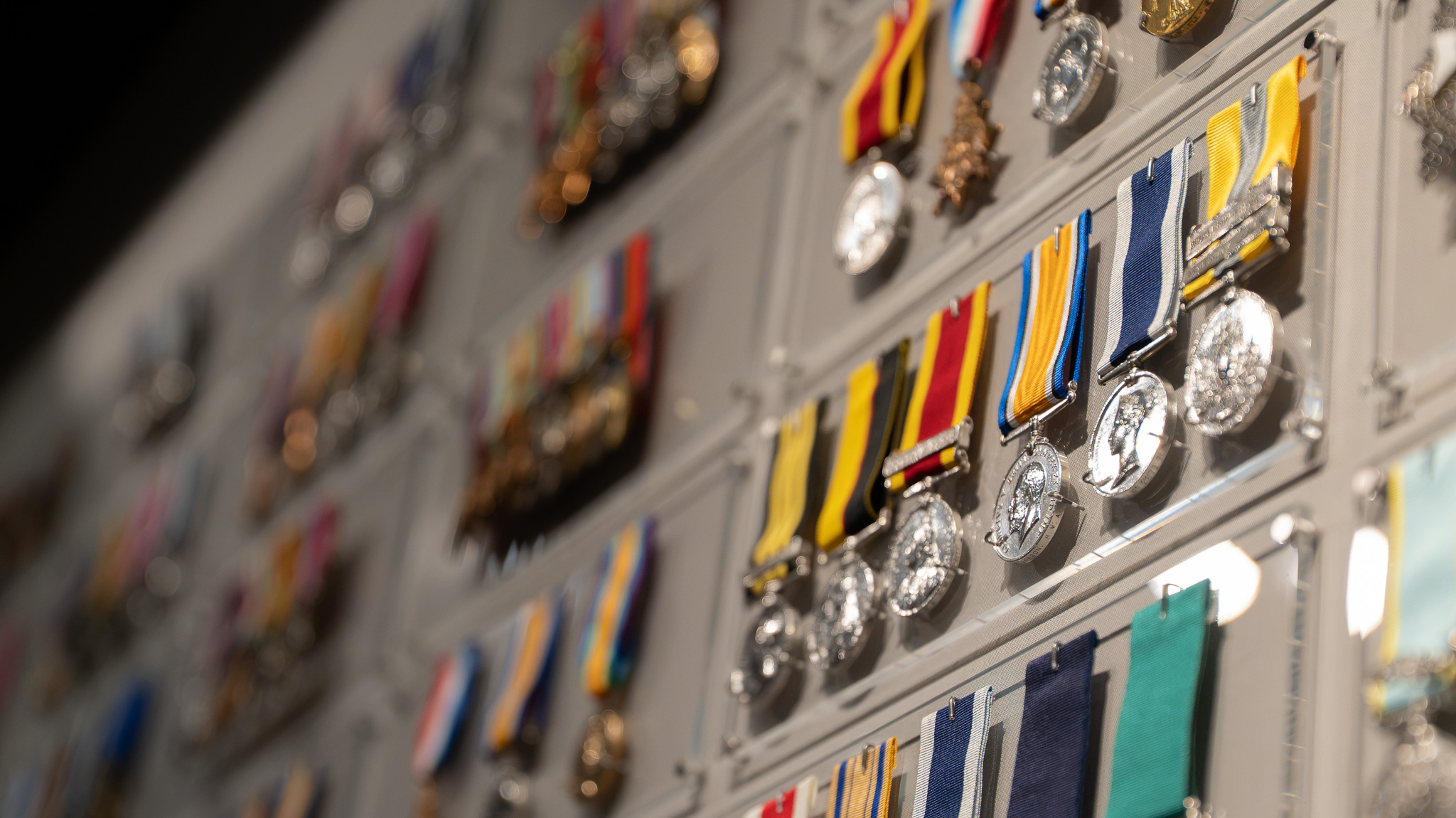
Royal Marines Experience will explore more than 360 years of Royal Marines history through objects, personal accounts, interactive galleries and immersive technology.
Hunter’s medal survives as evidence of an extraordinary act, but it also preserves the story of a 21-year-old who recognised the danger facing the people around him and chose to place himself in its path.
Discover Corporal Hunter’s Victoria Cross and the stories of the people behind the Green Beret at Royal Marines Experience.