
HMS Victory - Conservation log
It is over 250 years since HMS Victory was launched. Given her great age, it is amazing that a large part of her structure is still original.
Starboard entrance port – 1923 to present day
- Present at Launch - No
- Present at Trafalgar - No
- Present Pre-1923 - No
- Rarity - A unique hand-crafted replica. Although not original, it demonstrates a continuity of specialist dockyard skills.
- Completeness - Modern replica
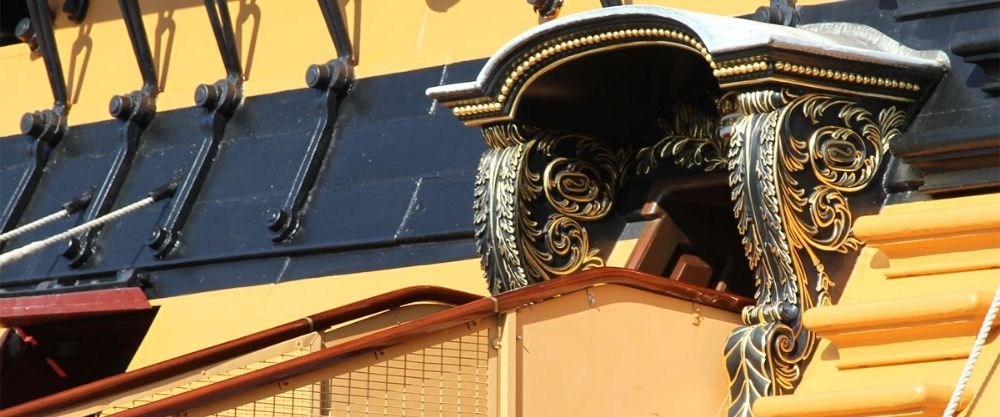
In 1923 it was noted that the original carved oak starboard entrance port canopy was badly decayed and recommended it needed replacing as part of the restoration work. By 1990 this replacement had also become rotten. In many places it was only held together by the thick layers of original old black lead paint.
The new entrance port canopy was completed in 1992. It is hand-carved from seasoned mahogany, a tropical hardwood that is expected to be more long lasting than the original oak. It demonstrates a traditional craft skill that can be traced back to Victory’s launch.
Starboard guns – 1923 to present day
- Present at Launch - No
- Present at Trafalgar - No
- Present Pre-1923 - No
- Rarity - The guns made from teak dating back to 1923 have some rarity value
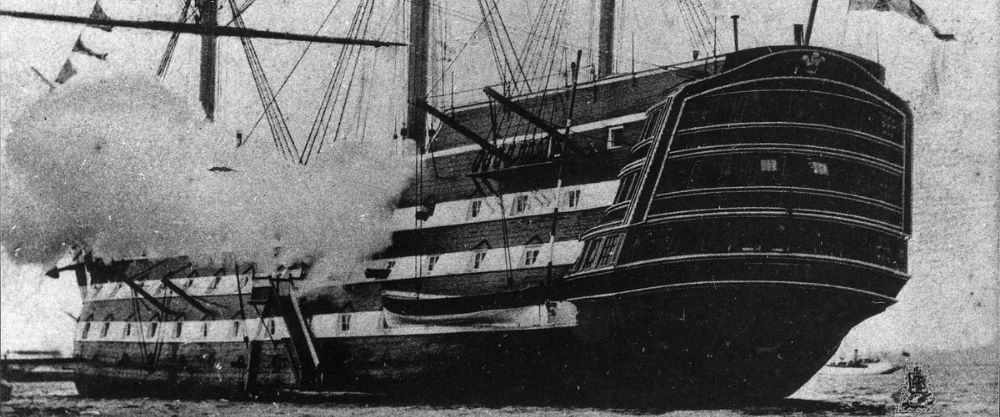
When Victory was brought into drydock in December 1922 it was a priority to remove as much weight from her as possible. She no longer carried her full complement of 104 guns from Trafalgar, but it was calculated that removing some of the guns she still had on board could save 97 tons. An original 32lb gun and gun carriage weighed about 3 tons.
During the 1923 restoration replica guns were made out of teak to give her gun decks the proper look and feel, whilst saving weight. Some of replica guns on board are now made from GRP (fibreglass).
Deck beams – present at Trafalgar (1805)
- Present at Launch - No
- Present at Trafalgar - Yes, especially on the orlop
- Present Pre-1923 - Yes, some of it back to 1814
- Rarity - Unique
- Completeness - 90% on orlop and lower decks, 50% on middle deck
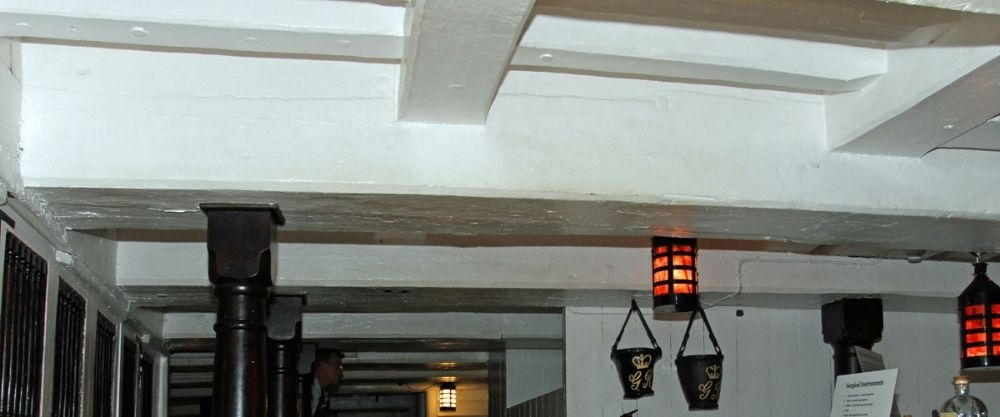
The deck beams are the very large timbers that run across the width of the ship. They support the decks and provide stability and rigidity. The beams are generally made from several overlapping pieces of oak. They are fastened with iron or copper bolts at each end onto timbers known as the beam shelves or deck clamps.
Thirteen percent of the beams on the middle deck have had repairs to their ends, but this only represents about 3% of the total length of original material.
In the orlop 90% of the deck beams are thought to have been present at Trafalgar. On the lower deck 90% pre-date 1923 and on the middle deck this figure is about 50%.
On some of the deck beams are cut shipwright’s marks, known as raze or scribe marks. These marks can identify and date the timbers. They show sequences of repair, how timber was managed and perhaps gives some clues about the people who worked on Victory. Most of this material dates from the 1814 – 1817 rebuild.
Pillars - present at launch 1759-1765
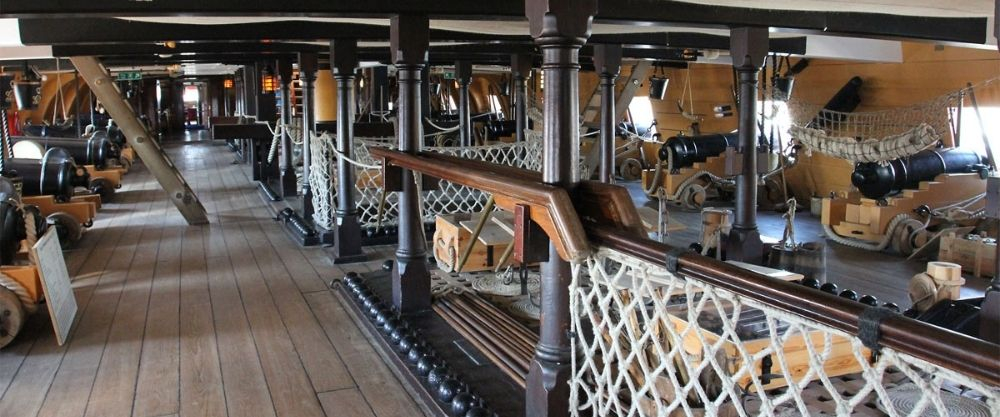
- Present at Launch - Yes
- Present at Trafalgar - Yes
- Present Pre-1923 - Yes
- Rarity - Not in themselves rare, but they form a major part of Victory’s unique deck structure.
- Completeness - Almost 100%
Many of Victory’s 173 pillars are original to launch. They sit upright between decks and provide additional support for the deck beams.
A few original pillars in the hold were removed to make room for a table for the Royal United Services Museum model of the battle of Trafalgar when the ship was docked for repairs in 1857.
Keel, hog and keelson - present at launch 1759-1765
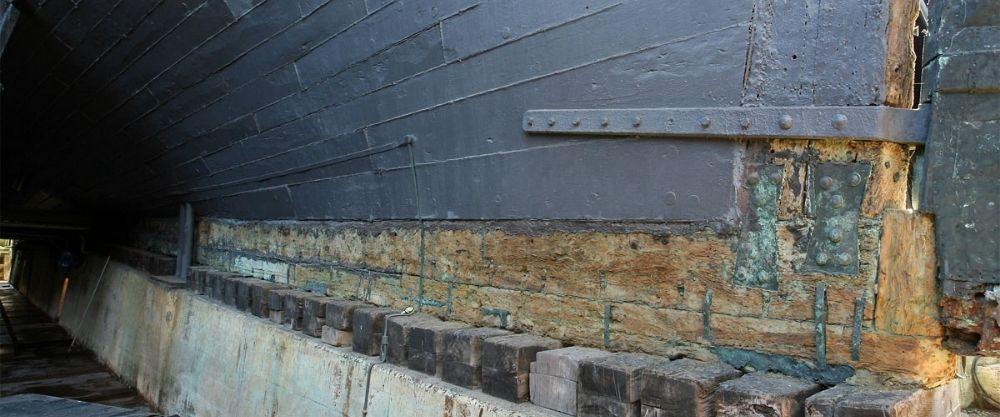
- Present at Launch - Yes
- Present at Trafalgar - Yes
- Present Pre-1923 - Yes
- Rarity - Unique
- Completeness - 90%
The keel is made of English Elm from the forests near Portsmouth. It was the first structure to be laid when building Victory. It is major part of the ship, which ties together the upright frames, the stem (front) and stern post (rear).
On top of the keel is another thick layer of English Elm known as the deadwood, or hog, which helps fix the bottommost planking. On top of the deadwood is the oak keelson, which attaches to the stemson at the fore (front) of the ship and the sternson at the aft (rear). Large sections of these structures are thought to be original.
The keel is believed to be almost entirely ‘as launched’, except for a 4.5 metre section that was damaged during a 1941 air raid.
All fastenings are copper, apart from those used for the modern repair, which are galvanised steel.
External planking - 1923 to present day
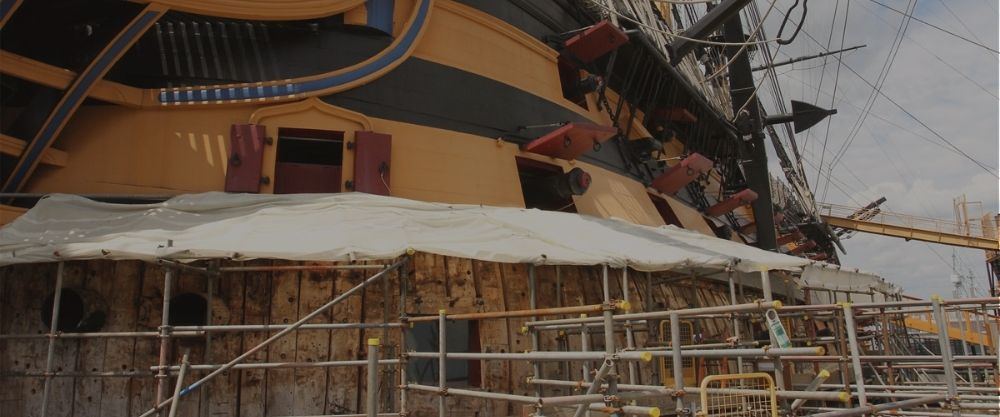
- Present at Launch - No
- Present at Trafalgar - No
- Present Pre-1923 - No
- Completeness - Some of the outer planking is under investigation and has been removed
Victory’s original external planking was mostly made from oak planks about 25 feet (7.6 m) long. When suitable oak could not be got hold of a number of beech planks were used. During the restoration the first 12 lines of planks nearest the keel were found to be English Elm, which lasts well when kept immersed in water.
External planks were always vulnerable to rot and attack from marine creatures. Only six years after launch rotten side planking needed repairing. When she was docked in 1922 her planking was so rotten it was near to collapse and a great deal of it was replaced.
Most of Victory’s exterior planking is currently made from iroko, an African hardwood, with a layer of teak laminated over the top. The iroko has performed less well than hoped and Victory’s planking is once again under investigation.
Deck planking - lower gun deck and orlop - present at launch 1759-1765
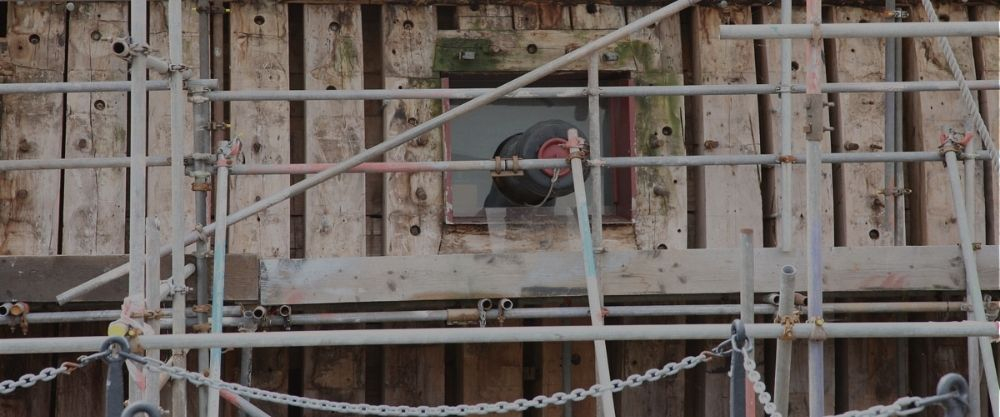
- Present at Launch - Yes
- Present at Trafalgar - Yes
- Present Pre-1923 - Yes
- Rarity - Unique
- Completeness - almost 100% on lower gun deck, 60% on orlop
The lower gun deck was the home for most of the ship’s crew. Many of them ate their meals, slept, were injured, deafened or killed on these planks. What we can see today are the same unpainted surfaces that they would have seen. The timbers of the lower gun deck provide a direct link with Victory’s crew.
There are around 500 planks on the lower gun deck and they are thought to be almost 100% original to launch. Below the lower deck is the orlop, where there are another 500 to 600 planks. 60% of these pre-date 1923 and could in part, also be original to launch.
Guns – present at Trafalgar 1805
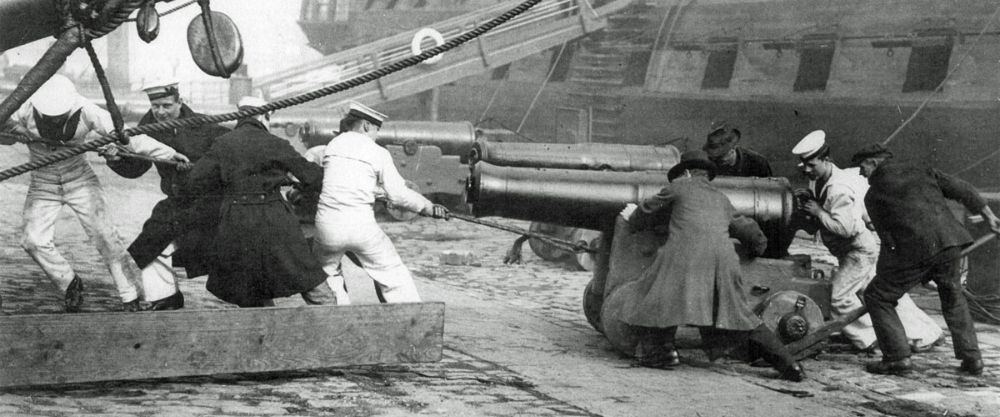
- Present at Launch - No
- Present at Trafalgar - Yes
- Present Pre-1923 - Yes
- Rarity - Unique, those that survive
- Completeness - 13 out of 104
Victory was designed as floating fortress. At Trafalgar in 1805 she carried 104 guns, but by the time she was brought into dry dock in December 1922 very few of those guns remained on board. Their total weight was enormous – 84 tons on the lower deck, 70 tons on the middle and 52 tons on the upper.
Commanders and crews constantly changed the way the guns were arranged and fired. They experimented with where they were placed on the different decks, the distribution of weight, how they were aimed and the best way to engage the enemy. They varied the types of shot used and the way the powder magazines were protected and experimented with the safest way to get gunpowder to the guns. They also modified the ways of making sure the cartridge detonated as firing mechanisms improved.
The guns on the dockside surrounding Victory mostly date from 1847.
The locations of the Trafalgar guns that remain on-board Victory:
Lower Deck, Long 32lb, pre 1805
- Station 44-47 port
- Station 60-63 port
- Station 68-71 port
- Station 77-80 port
- Station 44-47 Starboard
- Station 52-55 Starboard
- Station 60-63 Starboard
- Station 68-71 Starboard
- Station 86-89 Starboard
Middle Deck, Long 24lb, pre 1805
- Station 40-43 Port
- Station 48-51 Port
- Station 40-43 Starboard
There are also two long 24lb guns on the dock that are thought to pre-date 1805
Spars 1923 – present day
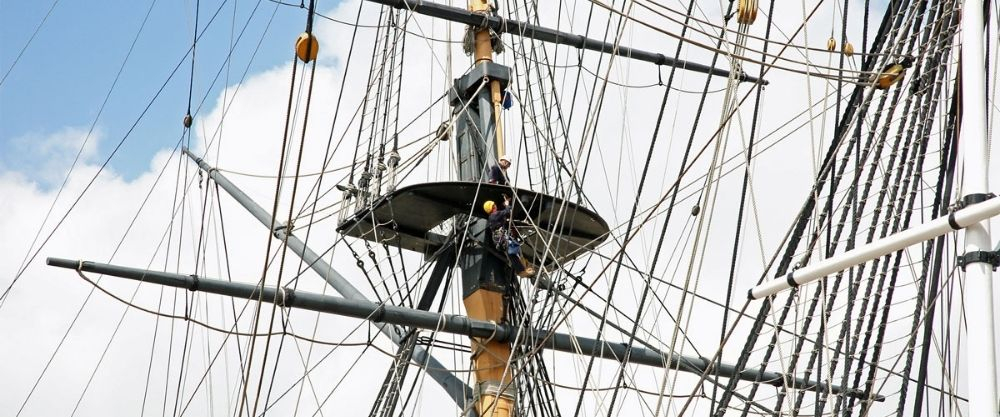
- Present at Launch - No
- Present at Trafalgar - No
- Present Pre-1923 - No
- Rarity - The complete set is unique to Victory but each one could not be described as rare or unique
- Completeness - Victory has a complete set of spars
Spars include all of the long timbers, such as yards, booms and gaffs, used to carry the sails. At sea spars could be damaged by storms and gales, and were one of the first things to go during a battle. Wooden spars also fell apart simply due to the weather. When a ship was not sea it was usually stripped to the lower masts and the spars were stored in dry airy conditions. Victory’s spars, and even her masts, were replaced on and off throughout her active life.
Until the late 1960s most of Victory’s spars were wood. Maintenance was a big problem and some even needed replacing every few years. It was also becoming harder to get hold of good timber of the right length.
Some spars were successfully coated with resin and fibreglass to make them last longer. Today her spars are a mix of treated wood and steel.
Rigging
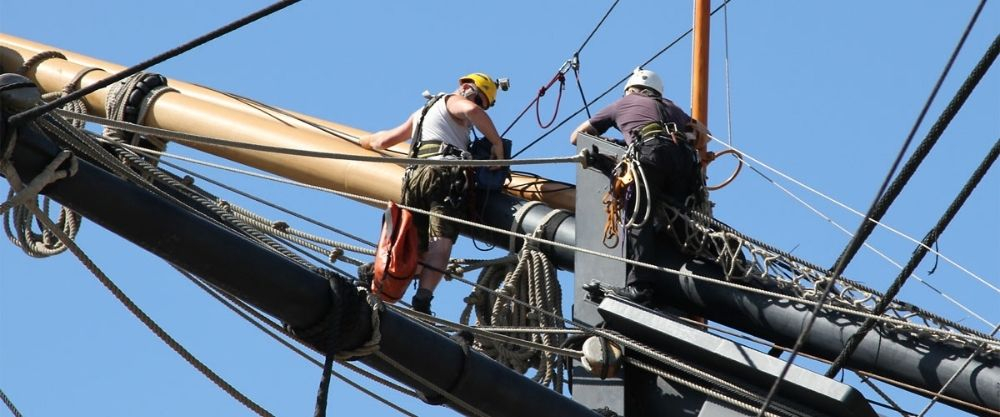
- Present at Launch - No
- Present at Trafalgar - No
- Present Pre-1923 - No
- Rarity - The rigging is unique to Victory but it is made from modern materials that have frequently been replaced
- Completeness - Victory’s rigging is complete
A ship’s rigging is made up of two parts: standing rigging and running rigging. Standing rigging holds the masts in place. Running rigging is actively worked while the ship is at sea to move the yards and handle the sails. Both types would have been made of hemp, a natural fibre. Standing rigging was usually tarred, which gave it a black colour. Running rigging was a natural pale grey. Rigging needed constant attention from the crew. It wore out quickly with use and was easily damaged by weather and warfare.
Victory is now rigged with suitably coloured polypropylene. This is much more sustainable and makes it possible for the ship to carry an impressive and authentic display of masts, yards and rigging. It still takes a skilled team of riggers to climb the masts to set it up and look after it.
Main capstan
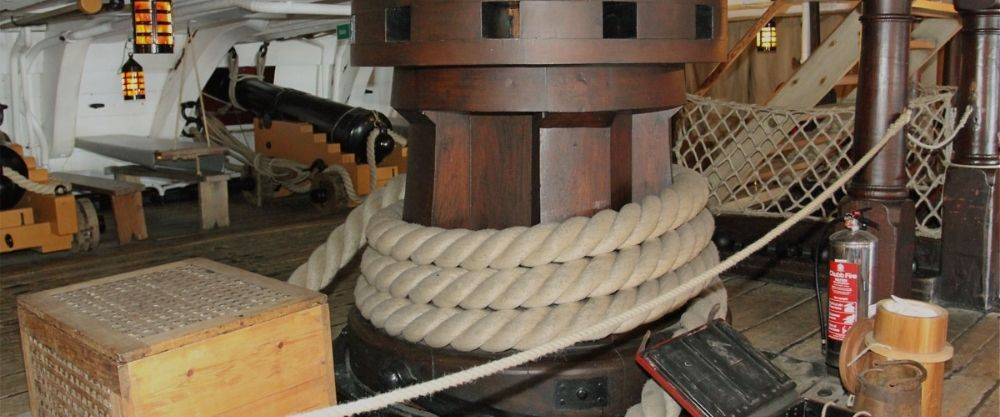
- Present at Launch - No
- Present at Trafalgar - No
- Present Pre-1923 - No
- Completeness - No. It is a non-working replica
Victory has two capstans, the main capstan and the jeer capstan. The main capstan is located towards the stern (back) and was originally used to raise the anchors. The main capstan is now a non-working replica made in the 1920s.
These large rotating structures extended down through the decks and could be turned by the crew to lift heavy weights. The drumheads (top part) of both capstans can be found on the middle gun deck.
The capstans show how a simple mechanism can multiply human power. They also provide an insight into the brute force required to run the ship, and the extent to which the Navy could call upon the crew to handle heavy weights.
Jeer capstan
- Present at Launch - Probably not
- Present at Trafalgar - Likely
- Present Pre-1923 - Yes
- Rarity - Unique
- Completeness - 90% original
Victory has two capstans, the main capstan and the jeer capstan. These large rotating structures extended down through the decks and could be turned by up to 260 crew members at a time to lift heavy weights. The drumheads (top part) of both capstans can be found on the middle gun deck.
The jeer capstan is towards the centre of the ship and was used to lift stores, boats and guns, as well as raising masts and yards. The main capstan is now a non-working replica made in the 1920s. It is located towards the stern (back) and was originally used to raise the anchors.
Victory’s jeer capstan is believed to survive from the 18th century but not be original to launch. It shows how a simple mechanism can multiply human power. It also provides an insight into the brute force required to run the ship.
Gunport lids
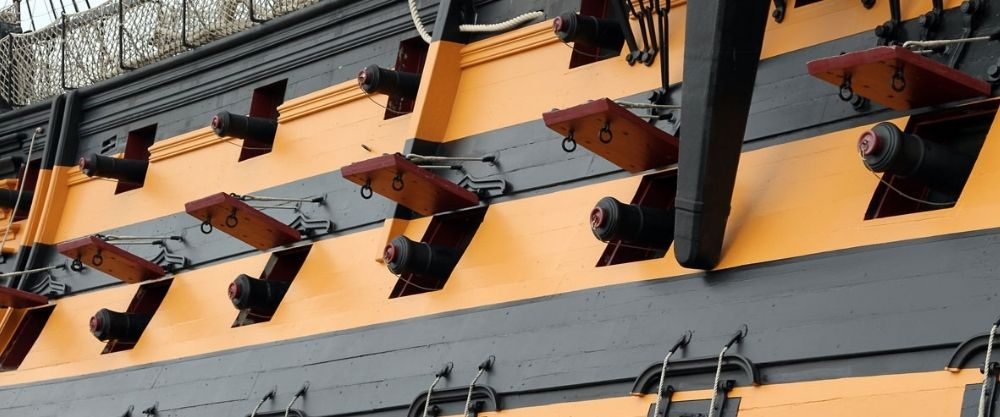
- Present at Launch - No
- Present at Trafalgar - No
- Present Pre-1923 - No
- Rarity - Little
- Completeness - As a modern set of portlids they are complete
The gunports were sealed by lids suspended on hinges. They were opened and closed from the inside with rope lanyards. They are shaped to follow the curve of the hull. The current gunports are all replicas made from teak, fastened with brass screws. Originally the gunports would have been made from oak or elm.
Early photographs of Victory show a high number of the gunports on the lower and middle decks were fitted with small glazed windows.
Bowsprit
- Present at Launch - No
- Present at Trafalgar - No
- Present Pre-1923 - No. Fitted 1936
- Rarity - Some
By 1936 it was clear that the Victory’s bowsprit, which dated from 1859, was no longer structurally safe. Experts advised that ‘it would appear to have earned its discharge’ and recommended that it should be replaced by a steel tube.
A section of the removed 1859 bowsprit is exhibited in Storehouse 10, at the foot of the staircase leading to the Fore Topsail Gallery.
Figurehead
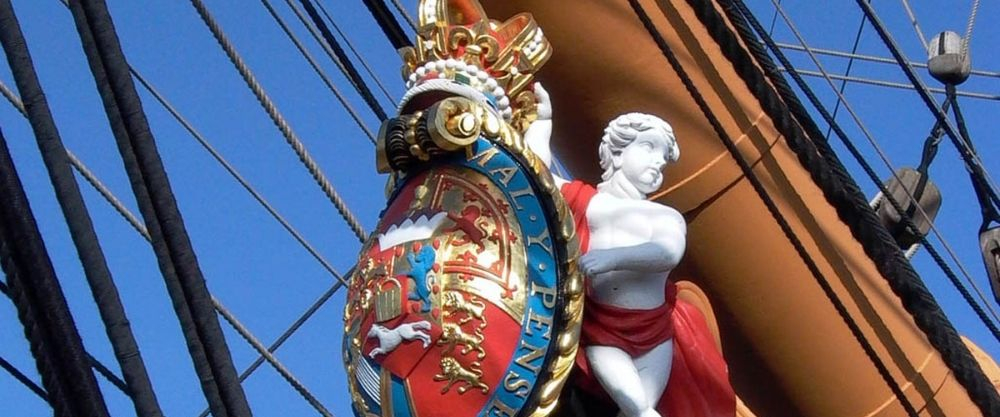
- Present at Launch - No
- Present at Trafalgar - No
- Present Pre-1923 - No
- Rarity - Can be thought of as a unique replica that has been an important part of Victory for nearly 20 years
- Completeness - Now removed due to poor condition
The figurehead represented the character of the whole ship. A great amount of care and expense was given to its design and construction. The figurehead at launch was very elaborate. In 1803 it was found to be very rotten and replaced with a much simpler design. You can see a scale replica of the original in the Victory Gallery.
The current figurehead is a modern replica of the one carried at Trafalgar. It was fitted in 1992, but removed in 2009 because of its poor condition. This demonstrates the challenge of caring for wooden structures left out in the wind and rain.
Pillars
- Present at Launch - Yes
- Present at Trafalgar - Yes
- Present Pre-1923 - Yes
- Rarity - Not in themselves rare, but they form a major part of Victory’s unique deck structure.
- Completeness - Almost 100%
Many of Victory’s 173 pillars are original to launch. They sit upright between decks and provide additional support for the deck beams.
A few original pillars in the hold were removed to make room for a table for the Royal United Services Museum model of the battle of Trafalgar when the ship was docked for repairs in 1857.
Stem
- Present at Launch - Some of it
- Present at Trafalgar - Some of it
- Present Pre-1923 - Yes
- Rarity - the surviving parts of the stem and stemson are unique.
- Completeness - 50% - stem and stemson. The beakhead structure is not original
The stem forms the front-most part of Victory’s hull at the bow. It is joined to internal extensions of the keel known as the keelson and stemson. The stem survives more or less in its original form. It is an extremely complicated element, made up of curved shaped timbers.
The protruding part of the bow structure, known as the beakhead, was changed a great deal both before and after Trafalgar. These external timbers are now mostly modern, but the underlying stem is still in place.
Keel - bomb damage repair
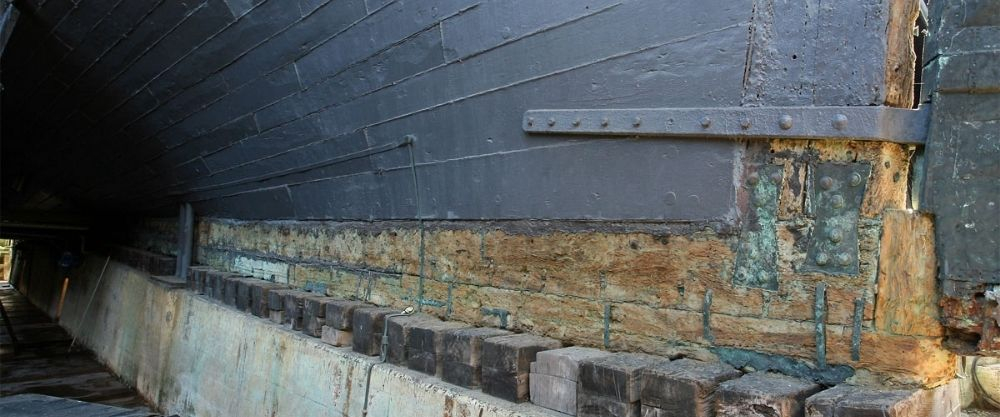
- Present at Launch - No
- Present at Trafalgar - No
- Present Pre-1923 - None. Modern teak repair
Victory’s keel is made of English Elm from the forests near Portsmouth. It is believed to be almost entirely ‘as launched’, except for a 4.5 metre section that was damaged during a 1941 air raid when a 250-kilogram high explosive bomb hit the masonry steps of the dock and exploded.
A hole, 2.5 metres by 4.5 metres was torn in her hull planking, and 4.5 m of her original keel destroyed. This was repaired using teak and galvanised steel fastenings in 1955.
Fastenings
- Present at Launch - Yes. A good proportion of original fasteners will exist in those parts that also date from the launch
- Present at Trafalgar - Yes. Many of them
- Present Pre-1923 - Yes. Many pre-date the modern reconstructions
- Rarity - the number and different kinds that exist in Victory represent a unique group
- Completeness - Many are intact
Victory is made from thousands of different parts. They are all joined together with many different sorts of fasteners and fixings. The large range of types shows how fastenings have changed over the years and the different materials available.
Some of the different types of fastenings found on Victory:
- Treenails – large round oak dowels with pitch pine wedges.
- Copper bolts – with roves (metal plates) and peened (hammered) heads. These will have the Ordnance broad arrow mark stamped on their surface every 2 cm (3/4 inches). These were used below the waterline as they didn’t corrode. Some extremely large such bolts have been found during the course of the reconstruction – up to 3 metres feet in length.
- Iron bolts with a forelock (a wedge) piercing through it.
- Iron spikes - these were typically square section, 2 cm thick at their widest point, and used for securing the deck planking.
- Iron tack bolts - round section bolts with barbed points and round or countersunk heads.
- Iron dumps - these were round section tapering bars with flat or slightly rounded heads, also used for deck planking.
- Coaks - these were either block or round dowels of oak or lignum vitae (a hard durable wood) used to locate two pieces of timber together.
- Copper or iron staples. The copper version was used for securing the different parts of the keel.
- The reconstruction work in the 1920s used mainly galvanised steel bolts with nuts, rather than traditional forms of fasteners.
Rudder
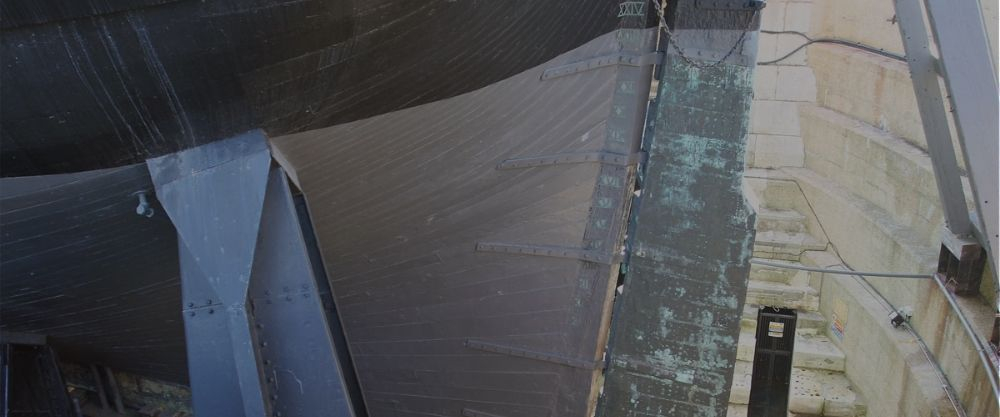
- Present at Launch - Probably
- Present at Trafalgar - Probably
- Present Pre-1923 - Yes
- Rarity - It is one of the largest surviving wooden rudders in the world.
- Completeness - 90% - All gudgeons and pintles (hinged fixings which attach it to the ship) are present, as are all the copper clench bolts
Victory’s massive rudder is made from four upright timbers of oak and pitch pine, fastened together with large copper clench bolts. It is nearly 12 metres tall.
The main body of the rudder is believed to be original. However the rudder stock (top) was extended in 1922 with a 1-metre extension, which extends up through an opening in the middle deck.
The rudder is hung from the stern post using pairs of large bronze fixings called gudgeons and pintles. The large pin of the pintle on the rudder fits neatly into the eye hole of the gudgeon on the stern post, allowing the rudder to swing freely from side to side. The gudgeons are fastened to the stern post with original copper fixings. The pintles are fastened to the rudder with a mix of original copper fixings and modern steel bolts added during repairs. Both the gudgeons and the pintles are thought to be original to launch.
Stern post
- Present at Launch - Highly Probable
- Present at Trafalgar - Yes
- Present Pre-1923 - Yes
- Rarity - Unique: One of the largest surviving stern posts in the world
- Completeness - 70%
The stern post was fitted during the early stages of Victory’s build. It is nearly 10 metres tall and was originally made from only two pieces of oak. It was repaired in the 1950s with a short length of teak.
It is joined to the keel and made secure with copper fishplates and fixings.
It provides support for the rudder and all the timbers of the stern and transom - the horizontal timber structures across the back of the ship.
Stern timbers
- Present at Launch - Yes, mostly. There might have been some replacement of timbers when the open stern galleries were removed in the late 18th century.
- Present at Trafalgar - Yes, mostly
- Present Pre-1923 - Yes
- Rarity - It is unique
- Completeness - 90% or more
The stern is at the aft (back) of the ship. It is possibly the most complicated structure within Victory’s hull. The entire structure is built around the stern post, and the upright frames extending from the keel.
From the keel to the top of the stern post there are 12 horizontal timbers called transom beams. The upper 8 transom beams are oak. The lower four are modern teak replacements.
The stern galleries, with their glazed windows, are built onto this main structure. They will have been repaired and replaced over the years.