
Five Things You Might Not Know About the Battle of Trafalgar
From an officer who accidentally boarded an enemy ship to a father and son fighting aboard HMS Victory, discover five extraordinary stories from one of history's most famous naval battles.
The Battle of Trafalgar is one of the most famous moments in British naval history. On 21 October 1805, Vice-Admiral Lord Nelson led the British fleet into battle against a combined French and Spanish force off the coast of southern Spain. The result was a decisive British victory, but one that came at an enormous human cost, including the death of Nelson himself.
More than two centuries later, HMS Victory remains at Portsmouth Historic Dockyard, offering an extraordinary connection to the events of that day. Her decks witnessed moments of remarkable courage, desperate fighting and devastating loss, involving people whose stories are often overshadowed by the famous admiral.
But how much do you really know about the Battle of Trafalgar?
From a misunderstanding aboard a Spanish warship to a French captain who came close to capturing HMS Victory, here are five stories that reveal a different side of the battle.
1. Sixty ships of the line and tens of thousands of men went into battle
When we think of Trafalgar, we often picture HMS Victory sailing towards the enemy, with Nelson standing on her quarterdeck. But the battle was far bigger than any single ship.
On 21 October 1805, 27 British ships of the line faced a combined fleet of 33 French and Spanish ships. Across both fleets, tens of thousands of sailors, marines and officers prepared for battle.
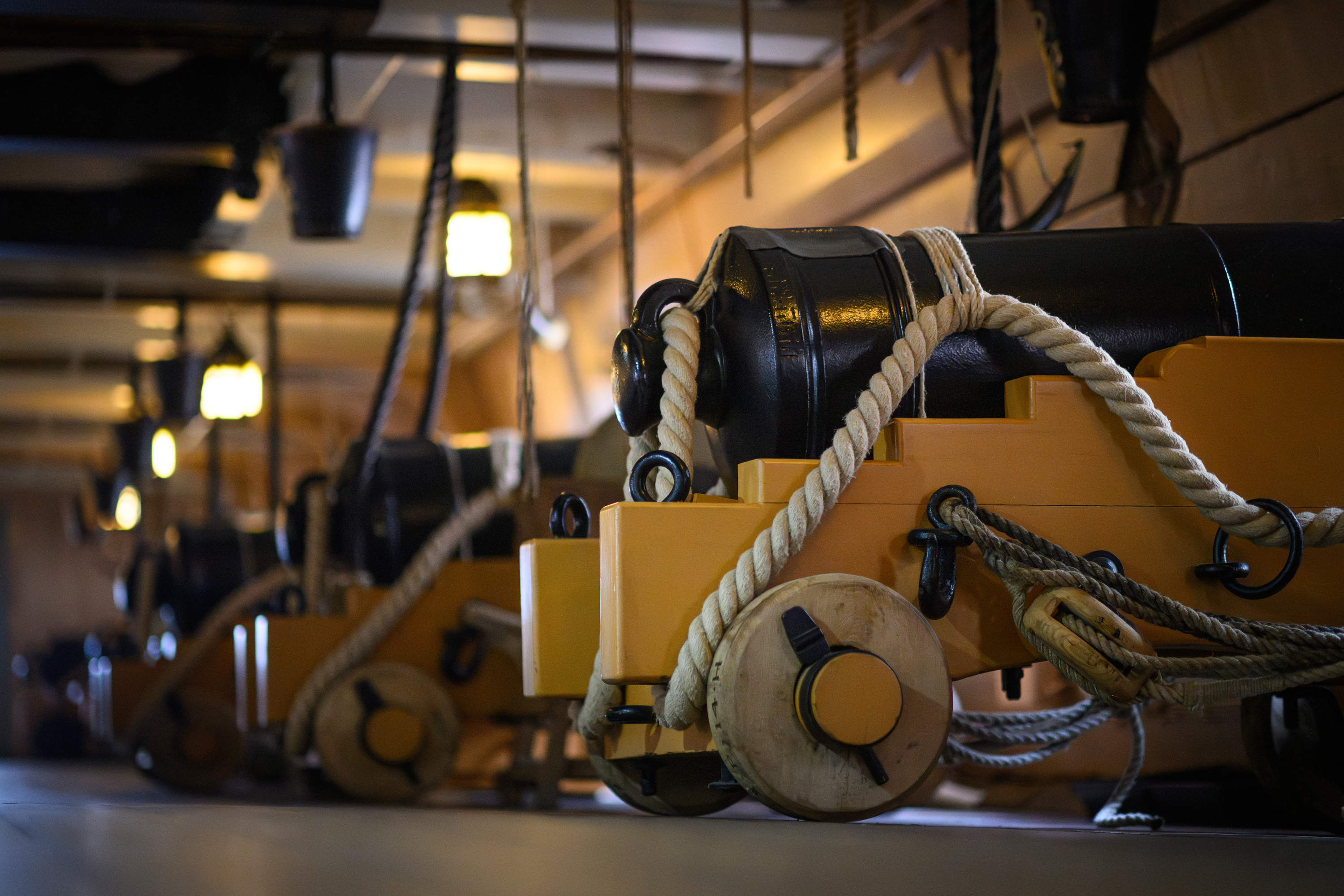
These were enormous floating communities, with crews numbering in the hundreds and sometimes exceeding a thousand men on the largest warships. HMS Victory alone carried 821 men into battle.
And perhaps one of the most surprising facts about her crew is just how international it was. Research into Victory's muster records has identified at least 22 different nationalities among the men serving aboard her at Trafalgar.
Alongside sailors from England, Scotland, Wales and Ireland were men recorded as coming from places including Malta, Portugal, Italy, Sweden, North America, the Caribbean and India.
Some were experienced sailors who had spent years at sea. Others had very different backgrounds and experiences of naval life. They had travelled different routes to reach the same ship, but on the morning of 21 October, they all faced the same danger.
Imagine the scene aboard Victory as the fleet approached the enemy. Guns were prepared, ammunition was moved into position and hundreds of men took their places throughout the ship.
For those aboard, the battle was not simply a contest between nations or admirals. It was a fight for survival, with no certainty about what the coming hours would bring.
By the end of the day, 51 of Victory's crew had been killed. Another 11 would later die from their wounds, while 91 wounded men survived.
Behind every one of those figures was an individual life, and often a family waiting for news.
2. The British officer who boarded an enemy ship that hadn't surrendered
Imagine rowing across to one of the largest warships in the world, in the middle of a naval battle, only to discover that nobody had actually surrendered. It sounds like something from a film, but this extraordinary incident really happened at Trafalgar.
HMS Africa, a 64-gun British warship commanded by Captain Henry Digby, had become separated from the main British fleet before the battle. Rather than joining Nelson's attacking columns, she approached the French and Spanish fleet independently, exchanging fire as she passed enemy ships.
During the fighting, Digby noticed that Santísima Trinidad was no longer flying her colours. This was significant. Lowering a ship's colours was a recognised way of signalling surrender, and Digby believed the Spanish vessel had given up the fight. He sent Lieutenant John Smith across in a boat, accompanied by a boat's crew, to take possession of the ship.
Santísima Trinidad was no ordinary opponent. With four gun decks and more than 130 guns, she was one of the largest warships of her age, considerably bigger than HMS Africa. Smith climbed aboard and reached the quarterdeck, where he was met by a Spanish officer, there was just one problem. Santísima Trinidad had not surrendered.
According to historical accounts, when Smith asked whether the ship had struck her colours, the Spanish officer replied that she had not. The Spanish crew were still fighting. Smith now found himself aboard an enemy warship, surrounded by men who had every reason to regard him as an opponent. Yet something remarkable happened.
Rather than taking Smith prisoner, the Spanish allowed him to leave. He returned to his boat and made his way back to HMS Africa, unharmed, while the battle continued. Just imagine the conversation on that return journey!
We don't know exactly what Smith and the boat's crew said to one another, but it must have been an experience. They had crossed the water expecting to take possession of a defeated enemy ship, only to discover that the fighting was far from over. And this story has a surprising connection to Portsmouth Historic Dockyard.
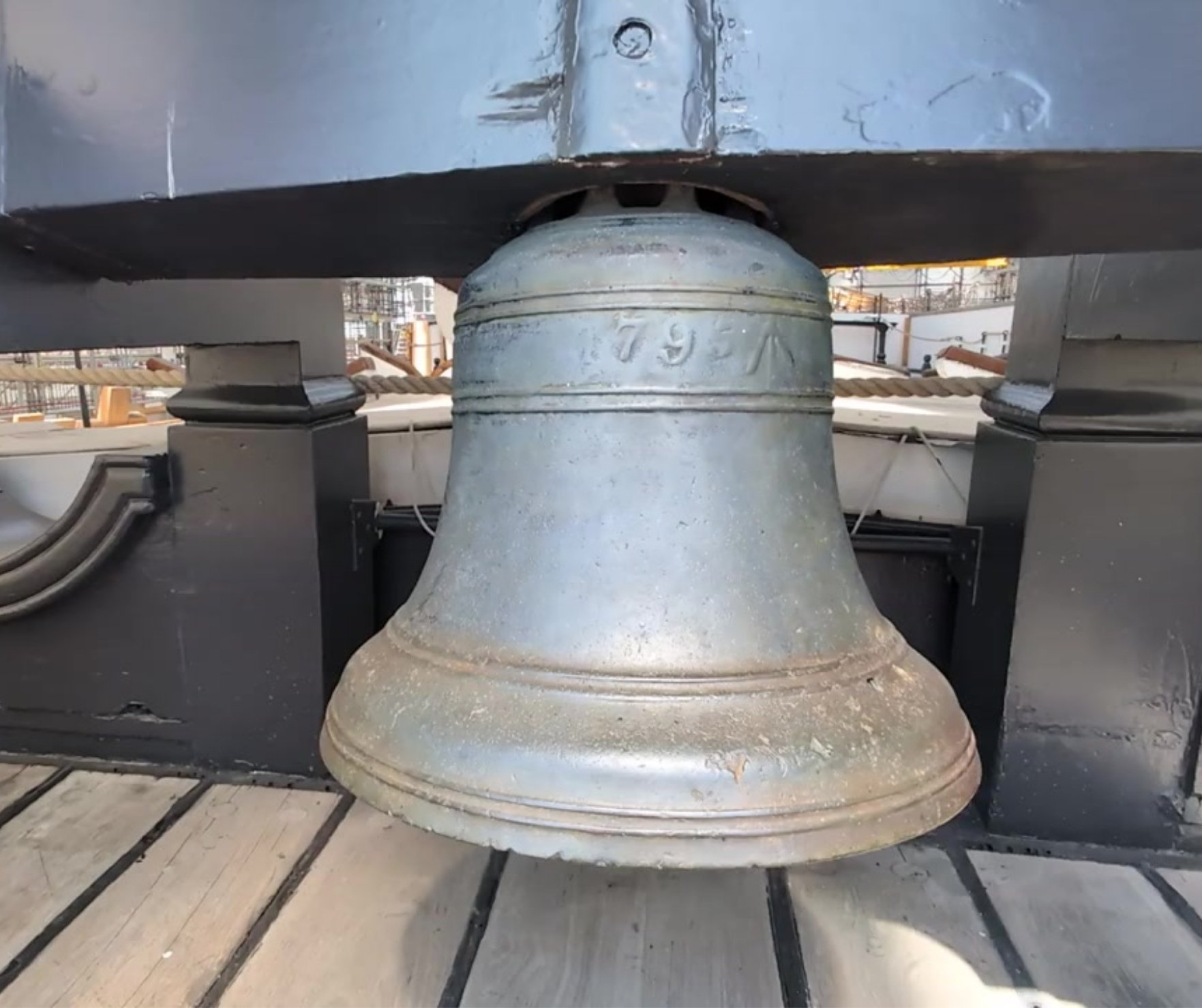
The bell on HMS Victory today is not her original bell. It came from HMS Africa, the very ship involved in this remarkable encounter.
So next time you visit HMS Victory, look out for the bell. Even an object as familiar as this has its own extraordinary Trafalgar story to tell.
3. The surgeon who treated more than 100 wounded men during Trafalgar
While cannon fire thundered above HMS Victory, a very different struggle was unfolding deep inside the ship. On the Orlop Deck, surgeon William Beatty faced the enormous challenge of treating the wounded as they were carried below from the fighting.
Beatty was just 32 years old. Working with two assistant surgeons and supported by attendants, he had to respond to a succession of devastating injuries in difficult conditions, while the battle continued overhead. The weapons of naval warfare inflicted terrible damage.
Musket balls could penetrate flesh and shatter bone. Grapeshot, clusters of smaller iron projectiles fired from cannon, could strike several men at once. Even the ships themselves became dangerous as cannonballs smashed into their wooden hulls, sending sharp splinters flying through crowded decks. Some splinters were large enough to cause injuries as devastating as those inflicted by the weapons themselves.
Beatty's surviving medical journal records 102 wounded men, preserving details of injuries, treatments and outcomes.
His work included removing accessible fragments from wounds, controlling bleeding, dressing injuries and performing amputations when limbs were too badly damaged to save. And all this was happening long before the development of modern surgical anaesthesia and antibiotics.
An amputation required speed, skill and physical endurance from both surgeon and patient. Even if someone survived the operation, the danger was far from over. Infection, gangrene and tetanus could prove fatal days or weeks after the original injury.
One of the men recorded in Beatty's journal was Midshipman Alexander Palmer. Palmer had been shot through the thigh by a musket ball. Remarkably, the ball had missed both the bone and the major blood vessels, injuries that might otherwise have killed him much more quickly. But his apparent escape was short-lived.
Despite treatment, including large doses of opium, Palmer developed tetanus and died on 28 October, a week after the battle. Others survived injuries that seem almost impossible to imagine today.
Able Seaman Jeremiah Sullivan suffered a severe head wound when a large wooden splinter stripped tissue from his skull. Yet he survived under Beatty's care. And among the wounded brought below was Nelson himself.
Mortally injured by a musket ball fired from the French ship Redoutable, Nelson was carried to the Orlop Deck, where Beatty attended him during his final hours.
Interestingly, Nelson does not appear among the casualties listed in Beatty's surviving surgical journal. The surgeon later published a separate account of the admiral's death in 1807.
Today, visitors to HMS Victory can descend to the Orlop Deck and discover the part of the ship where Beatty and his team worked.
It's a powerful reminder that Trafalgar was not only fought by the men firing the guns. It was also experienced by those desperately trying to save lives.
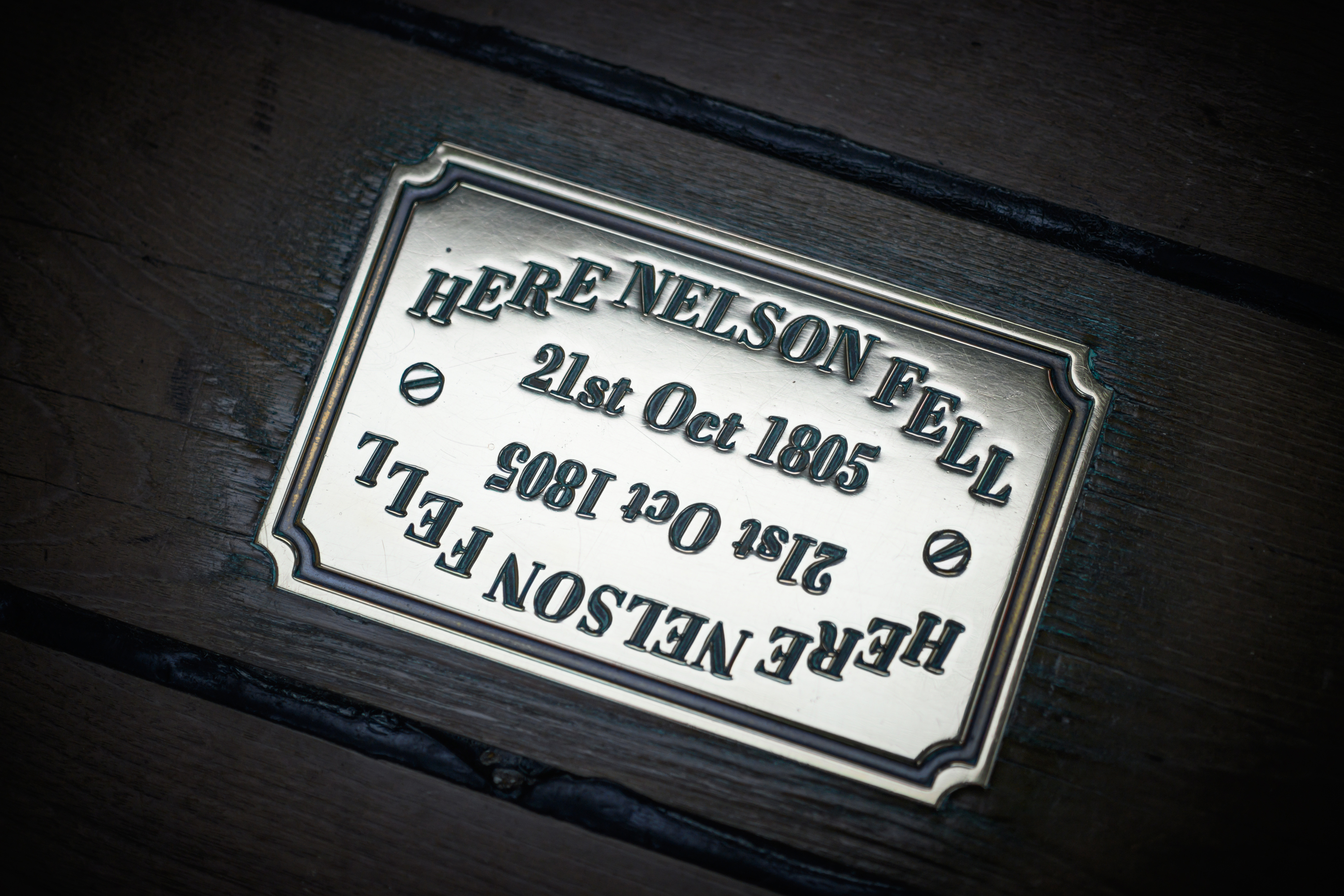
4. A father and son aboard HMS Victory
Among the hundreds of men serving aboard HMS Victory at Trafalgar were two people who shared more than a ship. They were father and son, and both were named William Rivers.
The elder William Rivers was Victory's gunner, a highly experienced naval professional responsible for the ship's guns, ammunition and associated equipment. He was 50 years old at the time of the battle.
His son, also William, was serving as a midshipman. Still a teenager, he had already spent years in the Royal Navy and had experienced naval action before Trafalgar. But nothing could have prepared either of them for what happened on 21 October 1805.
During the battle, the younger William suffered a devastating injury to his left leg.
The damage was so severe that he was taken below decks for an emergency amputation. Surgeon William Beatty removed his leg below the knee, without the benefit of modern anaesthesia. The young midshipman survived the operation.
What makes his story particularly remarkable is that his father's own written account of the battle has survived, preserving an intensely personal glimpse of the experience. When the elder Rivers came below to find his injured son, William reportedly reassured him that he had only lost his leg, and that it had been in a good cause. It's a remarkable response from someone who had just experienced such a life-changing injury.
We cannot know everything either man was feeling at that moment, but the circumstances are extraordinary. A father and son had entered the same battle aboard the same warship, and one had been left permanently disabled. Yet their story did not end at Trafalgar.
William Rivers recovered and went on to become a lieutenant in the Royal Navy. He lived until 1856, more than half a century after the battle. His survival was an achievement, particularly given the dangers of surgery and infection in the early nineteenth century.
Today, the Rivers family story offers a deeply personal perspective on Trafalgar.
Behind the famous victory were fathers, sons, brothers and friends, all facing the possibility that they might never see one another again. For the Rivers family, the battle changed their lives forever.
5. The French captain who tried to board HMS Victory
The Battle of Trafalgar is often told through the eyes of Nelson and the British fleet.
But what was it like for the French sailors fighting against HMS Victory?
One of the most remarkable accounts comes from Captain Jean-Jacques-Étienne Lucas, commander of the French 74-gun warship Redoutable. Lucas was determined to prevent the British fleet from breaking through the French and Spanish line. As HMS Victory approached, he manoeuvred Redoutable into position near the French flagship Bucentaure, preparing to confront Nelson's advancing ships. The resulting encounter was among the fiercest of the battle.
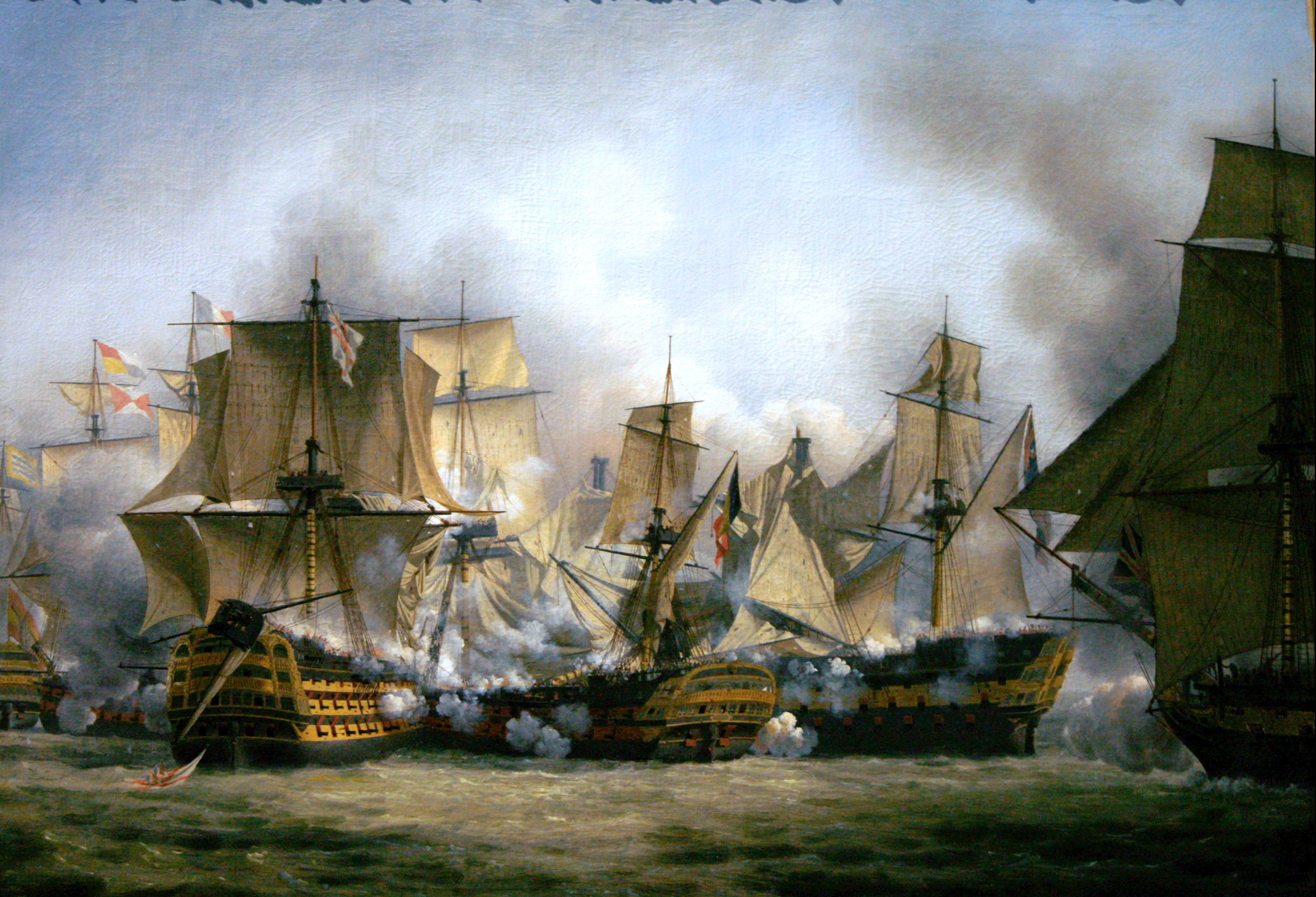
HMS Victory and Redoutable became locked together, their rigging entangled as the crews fought at extremely close quarters. Lucas ordered his men to prepare to board the British flagship.
It was during this fierce engagement between Redoutable and HMS Victory that Nelson received his fatal wound. At approximately 1.15pm, a French marksman firing from Redoutable's rigging shot Nelson as he stood on Victory's quarterdeck alongside Captain Thomas Hardy. The musket ball passed through his shoulder, lung and spine, leaving him mortally wounded.
According to Lucas’s own account, Redoutable's crew fired muskets and threw more than 200 hand grenades onto Victory. The French captain believed his men had gained the advantage on the British ship's upper decks, but boarding proved difficult. HMS Victory was a larger, taller warship, and the difference in height between the two vessels created a serious obstacle.
Nevertheless, Lucas recorded that a French officer, Ensign Yon, and four sailors managed to climb aboard Victory using an anchor. More French sailors were preparing to follow. For a moment, Lucas believed the capture of Nelson's flagship might be possible. Then HMS Temeraire arrived.
The British warship came alongside Redoutable and opened fire, inflicting devastating casualties on the French crew. Trapped between British warships, Redoutable suffered enormous damage. In his report, Lucas stated that 300 of his men had been killed and another 222 wounded. These were the captain's own reported figures, but they convey the terrible scale of the losses aboard his ship. Eventually, Redoutable surrendered.
The French warship had been so badly damaged that water was entering her hull. Despite efforts to save her and rescue the survivors, Redoutable sank the following day, with wounded men still aboard.
Lucas himself survived, although he had been wounded during the fighting. He was taken prisoner and later returned to France, where Napoleon recognised his conduct.
What makes this account particularly fascinating is that Lucas wrote his report just two days after the battle.
It gives us a rare opportunity to understand Trafalgar from the perspective of a French captain who had fought directly against HMS Victory.
His version of events naturally reflects his own experience and interpretation, but it remains an invaluable record of the determination of the men on the opposing side.
Trafalgar was a British victory, but its human cost was shared by sailors and soldiers from all three nations.
Discover the stories of Trafalgar aboard HMS Victory
More than 220 years after the Battle of Trafalgar, HMS Victory remains at Portsmouth Historic Dockyard, offering visitors an extraordinary opportunity to explore the ship at the centre of these events.
Step aboard Nelson's flagship and discover the decks where hundreds of men lived, worked and fought. Visit Nelson's Great Cabin, descend to the Orlop Deck where he spent his final hours, and explore the spaces that witnessed some of the most significant moments in British naval history.
But HMS Victory's story doesn't end in 1805. With Victory Live: The Big Repair, you can see the ship from extraordinary new perspectives, including her iconic stern up close and the remarkable opportunity to stand beneath her vast hull. Discover the conservation work helping to preserve her for future generations, and explore the Victory Gallery to uncover even more stories from her remarkable history.
Whether it's the courage of a young midshipman, the determination of a French captain or the unexpected story behind a ship's bell, there is always something new to discover.
One ship. Hundreds of stories. Still making history.
Plan your visit to HMS Victory at Portsmouth Historic Dockyard and book online before you arrive.